
Author: Professor (Dr) Geetha B Shetty
Every year, 18 November is observed as Naturopathy Day across India to create awareness about the importance of Naturopathy and its role in promoting healthy living. The year 2026 marks the 9th Naturopathy Day. This date has historical significance as, on 18 November 1945, Mahatma Gandhi became the Lifetime Chairman of the All India Nature Cure Foundation Trust and signed its deed, with the vision of making nature cure accessible to all sections of society. In recognition of this occasion, the Ministry of Ayush, Government of India, declared 18 November as Naturopathy Day in 2018.
The theme of this year’s observance, “Naturopathy, Healthy India,” reminds us that the foundation of a healthy nation lies in the health and well-being of its people. As India progresses towards becoming a healthier nation, the growing burden of lifestyle-related disorders such as diabetes, hypertension, obesity and cardiovascular diseases calls for greater attention to preventive healthcare. Changing food habits, physical inactivity, inadequate sleep and increasing stress have become important contributors to these health challenges. This makes the principles of Naturopathy particularly relevant in today’s society.
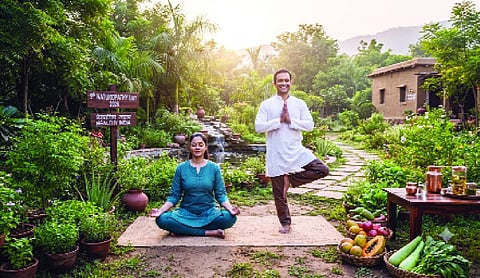
Naturopathy incorporates various natural therapeutic approaches, including diet therapy, hydrotherapy, mud therapy, massage, therapeutic fasting under appropriate supervision and yoga. These approaches aim to support normal physiological functions, promote relaxation and encourage healthier living. Yoga contributes to physical flexibility, muscular strength, breathing efficiency and mental well-being. Similarly, balanced nutrition and regular physical activity play an established role in maintaining metabolic health and reducing the risk of lifestyle-related disorders.
An important strength of Naturopathy is its emphasis on preventive healthcare. Many lifestyle disorders develop gradually over several years, often due to unhealthy dietary patterns, sedentary behaviour and chronic stress. Encouraging people to make small but consistent lifestyle changes can have a meaningful impact on long-term health. Choosing nutritious food, spending time in nature, maintaining regular physical activity, practising yoga and managing stress are simple yet valuable steps towards healthier living.
Scientific research is increasingly becoming an important part of the development of Naturopathy. Research is moving beyond general observations towards systematic clinical trials, objective health measurements and evidence-based assessment of therapeutic interventions. Emerging areas include the study of heart rate variability (HRV) to understand autonomic nervous system responses, metabolic and biochemical markers to assess health outcomes, and the effects of integrated Naturopathy and Yoga programmes on hypertension, metabolic syndrome, stress and healthy ageing.
Recent Indian clinical research has explored these interventions using parameters such as blood pressure, blood glucose, lipid profile and HRV. Digital health monitoring, personalised lifestyle interventions and long-term follow-up studies are also opening new possibilities for research. Such developments are important to understand how these interventions work, identify their benefits and limitations, and establish appropriate clinical applications.
However, the future of Naturopathy must be guided by scientific understanding, clinical evidence and responsible healthcare practices. Larger clinical studies, standardised treatment protocols, quality education and systematic documentation of clinical outcomes are essential to strengthen its credibility. Integrating traditional knowledge with contemporary scientific research will help develop Naturopathy as a more evidence-informed healthcare discipline. It should also work responsibly alongside other healthcare systems, with timely medical referral whenever necessary.
At the National Institute of Naturopathy, Pune, we remain committed to promoting Naturopathy through education, research, clinical services and public health awareness. Our efforts focus on developing skilled healthcare professionals, generating scientific evidence and making the principles of healthy living accessible to the wider community. Through academic activities, research initiatives and public outreach programmes, we aim to contribute to the growth of Naturopathy as a responsible healthcare discipline.
Building a healthy India is not the responsibility of healthcare institutions alone. It requires active participation from individuals, families, educational institutions, workplaces and communities. Health should not be viewed merely as the absence of disease; it is a state of physical, mental and social well-being that must be nurtured every day.
On this 9th Naturopathy Day, let us renew our commitment to living in harmony with nature, making informed health choices and embracing preventive approaches to healthcare. A healthier nation begins with healthier individuals, and every positive change in our daily habits takes us one step closer to the vision of “Naturopathy, Healthy India.”
The writer is the Director of National Institute of Naturopathy, Pune, Ministry of Ayush, Government of India