
- HOME
- INDIA
- WORLD
- BUSINESS
- STATES
- LAW & JUSTICE
- ENTERTAINMENT
- SPORTS
- VIEWPOINT
- LIFESTYLE
- TECH
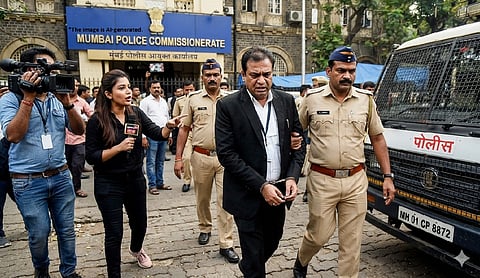
The Enforcement Directorate (ED) 's Panaji unit arrested Mumbai-based advocate Rashesh Bharatkumar Upadhyay alias Rashesh Shah on Saturday under the Prevention of Money Laundering Act (PMLA), 2002, as he tried to board a flight to Delhi from Chhatrapati Shivaji Maharaj International Airport, Mumbai.
An ED team, backed by Customs and CISF personnel, intercepted him at a boarding gate. They flew him to Panaji and produced him before a special PMLA court, which remanded him to ED custody until October 29. The arrest is the seventh in the case.
Investigators describe Upadhyay as a key node in a pan-India laundering network that processed proceeds of large-scale cyber fraud, including digital arrest scams. He allegedly arranged cash bribes through Angadiyas, private cash intermediaries, to unfreeze roughly 100 bank accounts that police had locked after victim complaints. The move kept the network operational. Although enrolled as an advocate, Upadhyay never appeared in court or filed a Vakalatnama for any accused or their companies, the ED has told the court.
The investigation began with a Goa Police FIR registered on June 9, 2025. A local woman was placed under digital arrest and coerced into transferring Rs 2.60 crore between May 21 and June 2, 2025, into accounts she was told were "Secret Supervision Accounts." The money was immediately split across about 400 mule accounts linked to commodity, travel and forex firms run by dummy directors.
The network's linked entities handled banking transactions of approximately Rs 28,000 crore and cash deposits of about Rs 2,900 crore, including heavy volumes pushed through bulk note acceptance machines. The same accounts surface in more than 300 victim complaints and over 160 FIRs across 20 states and Union Territories, with reported losses exceeding Rs 400 crore.
In many cases, a single victim's funds were routed into multiple entities of the same group, pointing to a shared pool rather than separate businesses.
Earlier arrests have covered operators who incorporated shell companies, moved funds, converted proceeds to cash and facilitated foreign-currency conversion through RBI-licensed money changers. The ED is now examining the officials who allegedly took the bribes, the Angadiyas (forwarding agents) who carried the cash, and the remaining proceeds of crime.
According to the ED, Upadhyay's detention highlights the systematic effort to defeat account freezes and convert cyber-fraud proceeds into cash and foreign currency.