
Next time you take a beautiful picture of an endangered animal in the wild and decide to post it on social networking sites, be careful! Your seemingly harmless activity of geotagging may just be giving away the location of the animal to a lurking poacher in any part of the world.
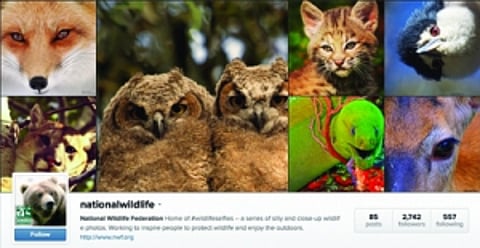
According to sources in the Wildlife Crime Control Bureau (WCCB), the hi-tech poachers are now turning digital as their latest weapon. They are increasingly using photos posted on the online picture-sharing website Instagram, as well as other social media networks, to pinpoint their prey.
Geotagging adds geographical metadata to a piece of content in real-time. They most commonly indicate latitude and longitude coordinates. They can also note the altitude, distance, accuracy and the name of a location. Geotags can be applied to photos, videos, text messages etc.
When a tourist takes pictures in a national park/ protected area with his GPS enabled smartphone and later uploads the image onto a social media site, the “geo-tags” embedded in the digital file allow poachers to track exactly where the picture was taken and where the animals are.
They are using geotagged photos on social networks in order to find out where they can make their next kill. Hence, in the conservation interest of the animal, it is essential to scrub the GPS data on the images prior to sharing them online. Geotagging thus makes cyberpoaching quick, easy and efficient.
According to experts, this is a new menace to wildlife poaching and common man needs to be made aware of it. Accordingly, it has now become the need of the hour for the parks and protected areas to put up boards that insist on turning off geotag function and not to disclose where the photo was taken, prior to sharing pictures on social media.
While capturing and sharing memories with an endangered animal may be a beautiful thing, one also has a tendency to sometimes specifically mention the location of the picture, which must be avoided. It is essential to ensure that the animal captured digitally does not get physically get captured by poachers, said the experts. Further, most media platforms allow users to turn on and turn off the feature, so the solution is simple but often overlooked unintentionally, they added.
Apart from the aforesaid precautions, the sources also mentioned of being aware of the small details prior to taking photographs in the wild, “The poachers have trained eyes, even a faint reflection, a structure, a sign, a logo, a unique tree, a site-specific color or species of flora might just give away the location”, they added.