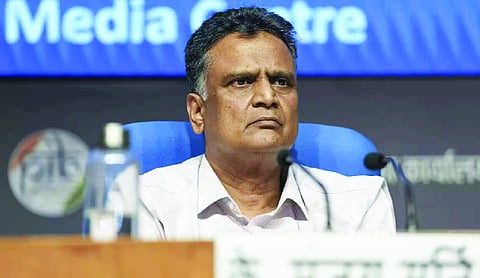

Comptroller and Auditor General (CAG) K Sanjay Murthy on Monday highlighted technology-driven reforms, data-based auditing and stronger local governance oversight as key priorities while marking 166 years of the institution at the annual Audit Diwas celebrations.
Addressing the gathering, Murthy said the department had tabled 40 Union Government and 174 State Government audit reports over the past year, making 3,742 recommendations. Nearly one-third of these recommendations were accepted by Governments and audited entities.
The CAG said the department audited more than 34,000 units and issued over 27,000 inspection reports. It also examined 8,793 accounts and issued 5,852 audit certificates. Highlighting major initiatives, Murthy said the department had undertaken a pan-India audit of urban mobility covering 101 major cities under the Ease of Living theme.
Audits of water supply, sanitation, housing and municipal finances are planned over the next three to four years.
He also flagged financial management concerns in State autonomous bodies. Of 839 such bodies, around 23 per cent have accounting arrears exceeding five years, while 59 have not submitted their first accounts.
The department is also expanding the use of digital platforms and artificial intelligence in auditing. It has secured access to enterprise resource planning systems in 182 public sector undertakings and introduced data-driven audit methods that reduced the audit cycle from six-eight months to three months in pilot projects.
Murthy said 17 officers had worked with startups on 16 artificial intelligence projects under the AI Champions and AI Enablers programme.
The CAG also announced initiatives to strengthen municipal accounting, including the preparation of the National Municipal Accounts Manual 2.0 with the Ministry of Housing and Urban Affairs.
On the occasion, Murthy and National Book Trust Director Yuvraj Malik released a book titled The CAG of India: Institution, Evolution and Public Value, tracing the institution’s history and contribution to public accountability. Murthy said the department must use technology while remaining committed to its constitutional mandate and strengthening public trust.