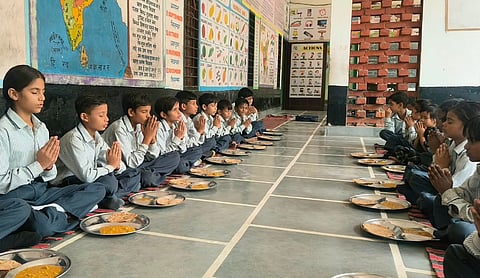

Through its partnership with government institutions under the PM POSHAN Scheme, Annamrita Foundation is working to address classroom hunger while strengthening school nutrition systems through centralized kitchens, efficient distribution and responsible resource management.
India: A nutritious meal can make a meaningful difference in a child's school day. It supports physical well-being, helps address classroom hunger and contributes to an environment where children can focus on learning. Recognizing the connection between nutrition and education, Annamrita Foundation has been working to provide mid-day meals to government schoolchildren across India, in collaboration with Central and State Governments under the PM POSHAN Scheme.
Formerly known as ISKCON Food Relief Foundation, Annamrita Foundation is a non-profit organization committed to building a hunger-free India where every child has access to nutritious meals and quality education. Its approach combines large-scale food preparation, structured distribution systems and a service-oriented philosophy to support school nutrition programmes.
From a Humanitarian Vision to a School Nutrition Initiative
The inspiration behind Annamrita traces back to the vision of A. C. Bhaktivedanta Swami Prabhupada, Founder-Acharya of the International Society for Krishna Consciousness (ISKCON). Deeply moved by the sight of children struggling with hunger, he envisioned a society where no one would have to go without food.
This humanitarian commitment gradually evolved into an organized initiative focused on hunger relief and child nutrition. In 2004, the organization began large-scale mid-day meal distribution in collaboration with government bodies, establishing centralized kitchens and systems designed to serve schoolchildren at scale.
The transition to the name Annamrita Foundation reflected a broader, inclusive identity. Meaning nectar-like food, Annamrita represents the belief that food is not merely a basic necessity but an essential contributor to dignity, well-being and opportunity.
Strengthening School Nutrition Across Haryana
In Haryana, Annamrita Foundation supports the implementation of the PM POSHAN Scheme in coordination with the Department of Elementary Education, Haryana. Its centralized kitchen network serves government schools across Faridabad, Gurugram, Kurukshetra and Palwal.
According to the organization's regional programme figures, its Haryana operations serve approximately 2.87 lakh students daily across 1,956 government schools. The district-wise distribution includes 90,503 students in Faridabad, 100,999 in Gurugram, 43,601 in Kurukshetra and 52,070 in Palwal.
These operations depend on coordinated kitchen management, food preparation, quality checks and transportation to ensure meals reach schools according to their distribution schedules.
The programme's purpose extends beyond serving food. By supporting access to meals during the school day, it contributes to the broader national effort to improve child nutrition and encourage educational participation.
Technology, Hygiene and Efficient Kitchen Operations
Preparing meals for thousands of children requires infrastructure capable of balancing scale with consistency. Annamrita's centralized kitchens use high-capacity cooking systems and organized operational processes to support large-volume meal preparation.
The organization's operating model emphasizes hygiene, food safety and quality assurance, including processes aligned with applicable FSSAI requirements. Automated cooking systems and chapati production lines also help streamline preparation and manage operational efficiency.
A structured distribution network supports the transportation of meals to government schools, with attention to timely delivery and hygienic handling. These interconnected processes are important to maintaining continuity in a programme that serves children across multiple districts.
Responsible Resource Management Behind Every Meal
An important aspect of Annamrita's kitchen operations is the focus on using fuel and other resources efficiently. Large-scale institutional cooking requires careful energy management, particularly when uninterrupted meal preparation is essential.
The organization describes several measures to optimize resource use, including steam-based cooking, efficient industrial boilers, optimized Piped Natural Gas (PNG) systems and automated chapati production. Operational monitoring and disciplined scheduling help reduce avoidable fuel consumption and minimize wastage.
Backup fuel arrangements are also part of its approach to operational continuity. These measures reflect the importance of maintaining meal services while managing resources responsibly.
For Annamrita, efficiency is closely connected to its service commitment: making the best possible use of available resources while maintaining food quality and consistency.
A Larger Mission Beyond the Kitchen
Annamrita Foundation's work also reflects the role of partnerships in addressing social challenges. Through collaboration with government institutions and CSR partners, the organization supports a shared objective of improving access to nutrition for schoolchildren.
Its mission includes promoting community participation and women-led employment. According to organizational figures, its activities have generated more than 31,500 women-working days over the past five years, highlighting another dimension of its social impact.
Ultimately, the significance of a school meal lies not only in the food served but also in the opportunity it helps support. Every meal represents a coordinated effort involving kitchen teams, logistics personnel, institutional partners and school systems.
By bringing together nutrition, operational efficiency and a commitment to service, Annamrita Foundation continues to contribute to India's school nutrition efforts. Its work reinforces a simple but important principle: when hunger is addressed, children are better supported in pursuing their education and building their futures.