
Mohenjo Daro’s failure must shake up industry
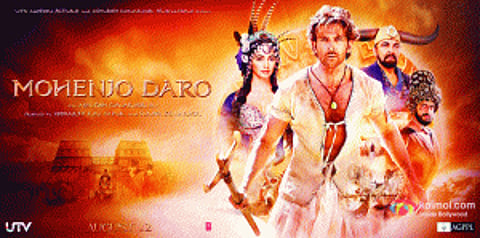
The decision by Walt Disney Co to stop producing Hindi films after the failure of Mohenjo Daro is symptomatic of an ailment that has afflicted the film industry. It is to do with the failure of production houses to keep budgets within manageable limits, thereby making it difficult for films to generate a decent profit. Mohenjo Daro was made at a colossal budget of Rs 115 crore and fetched Rs 58 in the first three weeks. This is pathetic given that films are today judged for their profitability by entering the Rs 100 crore club in the first week's release itself. It was evident that box office earning alone would not be able to help it break even. The income would have to be supplemented with overseas distribution and music rights. Unfortunately for this case, those avenues too do not seem to have yielded much. The failure is ironical given that a corporate approach to film-making is supposed to bring in fiscal discipline by cutting wasteful expenditure. It can be argued that the film demanded a glossy and larger-than-life canvas, which does not come cheap. But costs must factor in the returns as well. This is true of relatively smaller budget films as well. Take the case of Fitoor, incidentally produced by Disney. It cost Rs 60 crore but raked in only around Rs 20 crore. It is possible that production houses that are run along corporate models are less tuned in to the demands of the audience and more occupied with bean-counting. The creative fizz needed is something that these corporate are perhaps unable to appreciate. Again, while that may be so, it does not explain the big budget films' fiasco.
In the good old days, individual film producers and their production houses (quite different from film studios as a concept the West has had) made stuff that had a set story. The hero, the villain, the heroine, the comedian… all fitted into a predictable script. Then over the years, especially since the last two decades, bold film-makers began to experiment with new ideas and unconventional scripts where the characters had shades of grey. Stories were no longer linear and they began to touch upon hitherto taboo subjects. They were naturally made on nearly shoe-string budgets because no one wanted to take chances. The films did well and a new trend set in. However, in the race to be ‘different', anything that bordered on the weird — defined by the Indian audience's taste — came to be produced. It naturally got rejected. But the rejection was not so much due to the novelty as it was for getting the pulse of the people wrong. ‘Different' films like Maqbool, Ishkqiya, Tanu Weds Manu, Queen and English Vinglish registered box office successes, helped of course by the low cost of production. But more importantly, they were well-scripted films. All said, there is no need to write the corporate system's obituary. For every Walt Disney, there is Eros International, which is coasting along pretty well with the likes of Bajrangi Bhaijaan.