
Steve Jobs sadly passed away a few years ago, but the legacy of what he did a decade ago will live on for a long time. It is a legacy whose consequences, both good and bad, we will be dealing with for years to come
As the iPhone turns 10, the impact this one device has had on our lives is still being measured. But for better or for worse, the iPhone is undoubtedly the most influential device of the 21st century so far.
Around this time, 10 years ago, this writer was sitting in the boardroom of The Oberoi in Mumbai and interviewing Olli-Pekka Kallasvuo, ‘OPK’, the Chief Executive Officer of the world’s then largest mobile phone company, Nokia. OPK mentioned that ‘touch’ was an untested technology, and indeed, Nokia’s first attempt at a scale touch-screen device, the 6708, had seen a tepid reaction. The 6708, which this writer had reviewed around that time, was a clunky device that used a thin stylus as its primary input. Typing an email was, put bluntly, an irritating procedure.
Nokia continued, like most other ‘enterprise’ phone manufacturers, notably Canadian firm Blackberry, that a physical keyboard, in Nokia’s case the brick-like Communicator series, would continue to rule the roost. Touch would not take off, and after all, OPK argued, what did Apple knowIJ They were a number of computer company that made some accessory products (the iPod), Nokia specialised in mobile devices and their N-series of what one would describe as ‘first-gen’ smartphones had immense cameras. In that sense, Nokia had seen the future.
Nokia, as you know it, does not exist today. While the brand has re-emerged with a nostalgic 3310 basic device and some smartphones running Google’s Android software, the devices are being marketed by some Nokia veterans running a company called HMD which has the rights to market the Nokia brand which they acquired from Microsoft. The devices, however, are being manufactured by Taiwanese firm, Foxconn, the same company that contract manufactures the Apple iPhone. Blackberry too, a firm that never believed that the personal device the iPhone was would not harm it, was blindsided not just by Apple but by a small app called Whatsapp.
The first iPhone, which did change the paradigm of how a touch-screen worked wasn’t the best of devices and it was a decision that Steve Jobs, the great founder of Apple, did not like making which changed the devices fortunes. By allowing applications from the ‘App store’, Apple computer not only set in motion tremendous success for their hardware but also a chain of entrepreneurs who developed apps that made billions. One could reasonably argue that all the unicorns of the Silicon Valley exist because of the iPhone.
Would this change have also happened had Nokia and Blackberry remained dominantIJ Maybe. But Jobs was not the only tech maven to realise that people wanted a computer in their pockets with the increasing availability of high-speed data over the air, not in 2007, but Jobs knew the timeline for 3G, 3.5G and 4G. Jobs also realised that people wanted an air of simplicity on their devices. Mobile devices by 2007 had begun to come in different shapes and sizes, and as sophisticated Nokia’s Symbian 60 software was, their devices were not that easy to use unless you were a nerd. But then this writer tried the iPhone for the very first time, and touch-screen worked. Yeah, it was not 3G-capable until its second generation, it was expensive, fragile and the camera sucked, for lack of a nicer word until its fourth generation.
But Apple achieved success with the iPhone for another entirely different reason, it was American and the power of that country’s immense soft power through popular culture. Yes, Nokia had placed the famous ‘banana phone’ in ‘The Matrix’ series but the iPhone and its distinctive ringtone began displacing the Nokia tune on major television shows and movies without Apple paying a penny, because Americans had adopted the iPhone like a fish to water. American consumers had not really tried the Nokia smartphones, and the power of the American market in consumer electronics was made evident in the success of the Motorola Razr a few years earlier but the iPhone was something else.
By the time the third generation of the iPhone, the 3GS rolled around in 2009, everybody in the Silicon Valley used an iPhone even if they worked for one of Apple’s rivals and that concept spread like wildfire across the world. The iPhone became an ‘it’ device, something to show that you had arrived, and despite its price, it was surprisingly egalitarian, they call looked the same and unlike Nokia’s failed attempt with luxury phones, remember ‘Vertu’ anyone, everyone from the Chief Executive to an intern could have an iPhone. A brilliant episode of the award-winning American sitcom ‘Modern Family’ played an entire episode on Apple products using FaceTime and iMessage and apparently Apple didn’t spend a penny. If you haven’t seen this episode you must, it is one of the best episodes of what is undoubtedly a good television show and also demostrates how influential one company has become in our lives.
The only company able to respond to the rise of the iPhone was Google, which developed Android. While this set in motion an enmity between the executives of the two companies, it was Android as a software, and make no mistakes, Android’s look and feel is clearly inspired by the iOS software running on iPhones, made touchscreen and smartphones affordable. And manufacturers of Android devices, such as Samsung and HTC, set off an arms race with Apple making phones faster, better and smarter. This writer is currently trying out the new OnePlus5 made by Chinese manufacturer BBK (owners of Oppo and Vivo as well) and with its stunning specifications, this device is like having a laptop in the palm of your hand. Video calling, something that was the realm of science fiction in the 90’s is not only a reality, it is for all intents and purposes free. The information of the world is at your fingertips, heck, not even that, it is at the beck and call of your voice.
Are there negatives to what has transpired in the past decadeIJ The ability to access information anytime and anywhere as mobile networks improve dramatically is undoubtedly good. The smartphone has been a tool of empowerment, it has allowed millions to bridge the digital divide. Access to information is not a privilege of the very rich any longer, and one could argue that it has done to empower women in India than hollow talk by politicians.
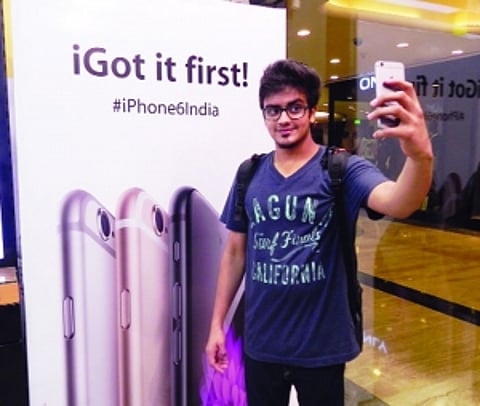
However, the rise of the image-obsessed selfie generation does make some people squirm, we might have dubbed ourselves as ‘selfiestan’ but every other day some young kid somewhere in India dies taking a selfie. Putting a video recording device in every hand might have worked wonders for transparency but is also used by some people to record them raping girls — this is far too common in India. And then there is the rapid spread of hate-speech and unsubstantiated rumours on messaging services such as WhatsApp, things that a police force and judiciary with one foot still in the twentieth century cannot cope with.
Jobs sadly passed on a few years ago, but the legacy of what he did a decade ago will live on for a very long time. It is a legacy whose consequences both good and bad we will be dealing with for years to come.
(The writer is Managing Editor, The Pioneer)