
Protectionism won’t make US ‘great again’
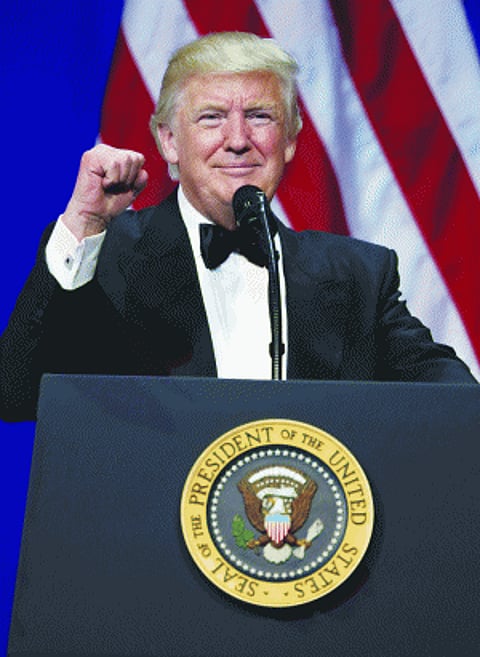
In his first presidential address, Donald Trump has vowed to “make America great again”. This is a fine sentiment, and one on which he came to power. Every head of Government of any country would want his or her nation to be ‘great'. The US has been great in the post-World War II era for two primary reasons: Its military and diplomatic heft; and its economic might. Both of these have grown through global interventions, some valid and others questionable. President Trump's ‘America First' slogan too cannot be faulted from his perspective. However, the America First idea cannot be a return to protectionism. An inward-looking US, that shies away from international or regional alliances — meaning not necessarily withdrawing from pre-arranged pacts but adhering to them half-heartedly — cannot make America great again. While there may be certain agreements, such as the Trans-Pacific Partnership (TPP), that may not be as good as they sound on paper, there are other international bodies such as the United Nations which must not be undermined. Trump has in the past questioned the UN's credibility, and he has reasons to do so. Even India has been scathing in its criticism of the failures of this international organisation on various grounds. And yet, the solution lies in tackling the shortcomings and not throwing the baby out with the bathwater. Trump must work to address the lacunae, and here he will find complete support from India. The new US President cannot afford to take his country into a shell because that will leave the space open for China to occupy. Beijing is already challenging the old order dominated by the US and seeking to tweak it to suit its concerns, such as at international forums like the G-20 and through those such as the Shanghai Cooperation Organisation. Besides, China's growing muscle in the South China Sea and its position on the Indian Ocean are matters that Washington, DC, cannot ignore. President Trump is no admirer of China and he will not want Beijing to have a free run. While Trump has said that old alliances will continue, he will have to walk the talk — else nations traditionally aligned with the US could shift their allegiance to a rising China.
President Trump wants American jobs for Americans. On the face of it, there's nothing outrageous about the aim. He has been an enormously successful business man with interests spread across the world. He understands the power of globalised economy and a trans-nationally integrated economy — with enough leeway for individual nations to tweak the parameters to suit their specific needs. US tech firms, for instance, depend substantially on Indians who work there on H-1B work visas. The Trump Administration is being asked to not fiddle with the visa arrangement. But then, the new President has every reason to ensure primacy to his nation’s citizens in job opportunities. This apart, there is no reason to believe that President Trump will rub India the wrong way. He realises the country's potential and admires Prime Minister Narendra Modi. He must demonstrate the vigour his predecessor showed in pushing India's case globally — for instance, over the membership of the Nuclear Suppliers Group. Meanwhile, New Delhi will keenly watch Trump's Pakistan policy.