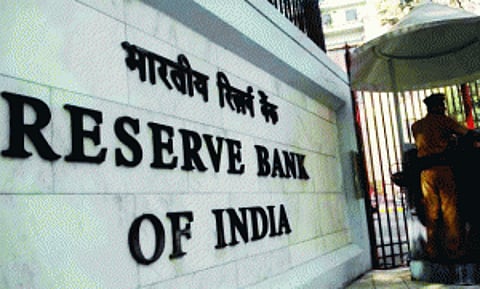

With the hope of good monsoon and rise in productivity in almost all sectors across India, Reserve Bank of India (RBI) will get some room to cut key policy rates upto by 50 basis points (bps) this fiscal.
As the disinflationary pressures would keep the central bank on an easing path, inflation is expected to remain below 5 per cent level by the quarter ended March 31. Besides, India Inc is still hopeful of further rate reduction from the central bank to boost investment in the country, according to global financial services majors.
“Inflation in India is expected to fall to 4.5 per cent by the quarter ended March 31, and this in turn would give RBI space to cut key policy rates by 50 basis points this fiscal,” said a Morgan Stanley survey.
In line with the Morgan Stanley report, another global brokerage firm Bank of America Merrill lynch (BofA-Ml) pointed out that the RBI is expected to cut key interest rates by 25 basis points in its policy review meet on August 9, if good rains damp pulse price inflation.
However, keeping the current status of the country's economy, economists believe the central bank may go slow on its rate cut move. The new RBI Governor, who would be appointed by the Government any time soon, is expected to face a series of challenges. As he or she will be under tremendous pressure from the Government, industry and bankers to go soft on interest rates, he cannot be a hawkish on interest rates in the Indian economy.
As far as the inflation situation of the country is concerned, BofA-Ml said in its research note, “With good rains, pulses' sowing for the Kharif season has jumped 39 per cent above last year's sowing. This should pull down pulses prices by 20 per cent and cool CPI inflation to 5.1 per cent by March.”
In the June policy review meet, RBI Governor Raghuram Rajan kept interest rates intact, citing rising inflationary pressure, but hinted at a reduction later this year if good monsoon helps ease inflation. The report further noted that inflation is expected to fall to 4.5 per cent by quarter ended March 2017.
Fall in inflation would be largely because key drivers like commodity prices, wage costs, fiscal consolidation, and property prices remain at benign levels and this in turn would give the RBI space to cut policy rates by another up to 50 bps by quarter ended March 2017 and taking cumulative rate cuts since January 2015 to 200 bps.
According to the BofA-Ml report, the RBI could slash policy rates for three reasons - a good monsoon would douse afflation, June core-CPI inflation has softened and finally, high lending rates continue to constrain May industrial growth. "If good rains damp pulses prices inflation, as we expect, CPI inflation should be well on track to the RBI's 5 per cent March 2017 target," the report added.
Meanwhile, the wholesale inflation accelerated for the third straight month in June hitting 1.62 per cent on costlier food and manufactured items. The hardening of the WPI index follows an uptick in retail inflation which hit a 22-month high of 5.77 per cent in June.
While Morgan Stanley survey further said, "We expect macro-stability conditions to be maintained as the recovery is expected to be driven by rise in productivity, with a low risk of the economy overheating."
Meanwhile, the wholesale inflation accelerated for the third straight month in June hitting 1.62 per cent on costlier food and manufactured items. The hardening of the WPI index follows an uptick in retail inflation, which hit a 22-month high of 5.77 per cent in June, dampening chances of a rate cut by RBI at its next policy meet.