
After burdening the common man by almost doubling the price of natural gas to $8 per million metric British thermal unit(mmBtu), the Government on Friday chose to offer a lollypop to the sulking power and fertiliser sectors, saying that it may moderate the price to keep the electricity and urea costs under control.
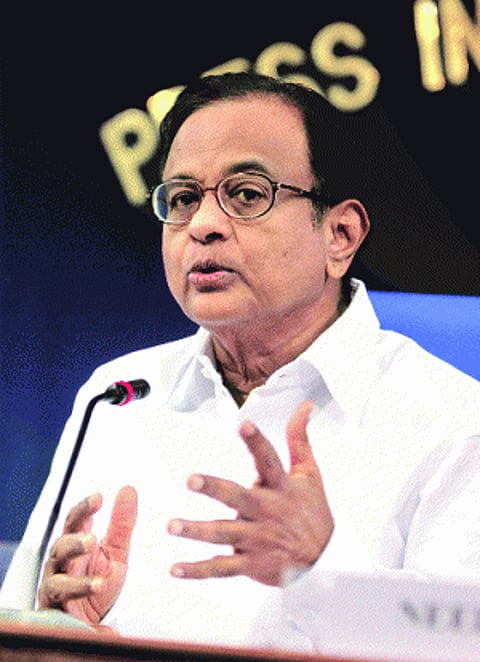
Finance Minister P Chidambaram on Friday hinted at moderating the price of fuel to power and fertilizer sectors so as to keep electricity and urea costs down.
The increase in current gas price of $4.2 per will result in sharp rise in cost of producing power and fertilizer as well as rates of CNG for automobiles.
Finance Minister P Chidambaram while briefing media persons on the decision taken by the Cabinet Committee on Economic Affairs (CCEA) on Thursday evening, said the both the Power and Fertiliser Ministries (which had vehemently opposed the move to hike gas prices), had raised the matter related to higher costs.
“The power and fertiliser ministries have raised the issue. We can look at fixing the input costs for these sectors. The issues will be addressed in course of time,” he said without elaborating.
Asked if his statement meant that the Government will subsidise gas supplies to power plants and fertiliser units, he said the CCEA has given output price of gas producers and not the input price of consumers.
“Input price of gas will be fixed in course of time,” he said. While producers will get a price determined by the Rangarajan formula, user industries of power and fertiliser may get gas at lower price with government subsidising the difference.
Chidambaram said investments in India were declining and companies were investing abroad. In the last 10 years, $27 billion investment has flown out and another $10 billion is in the pipeline.
In absence of remunerative prices, no investment has been made in domestic exploration and production, resulting in fall in natural gas production from 143 million standard cubic meters (mmscmd) per day in 2010-11 to 111.44 mmscmd in 2012-13, Chidambaram said, adding fall in domestic output meant that imports of liquid gas (lNG) rose sharply.
“The only way to correct this is to give reasonable price which will attract this investment. For every unit of gas that we do not produce, it does not mean we are not consuming that gas. We are importing that one unit,” he informed.
Imported gas price is three times the domestic gas rate and importing gas was unsustainable for Indian economy, he said.
“The choice is to live without gas or to produce gas because third alternative to import is simply not sustainable,” the minister said.
The new price will apply uniformly to all producers, be it state-owned firms like Oil and Natural Gas Corp (ONGC) or private sector Reliance Industries. While it was previously said the new rates would apply to regulated or APM gas produced by firms like ONGC immediately, the pricing as per Rangarajan formula will come into effect from April 1, 2014.
Meanwhile while elaborating on the Cabinet’s clearance given to the setting up of the Coal Regulatory Authority, Chidambaram said that the Government will issue an executive order for this purpose.
The proposed regulator would fix the formula for deciding coal prices and will also address dispute arising among the stakeholders.
The Coal Regulatory Authority Bill, 2013, needs Parliamentary approval and is to be introduced in the next session, Chidambaram told reporters. “Pending the passage of the bill, we propose to set up the authority by an executive order. There are precedents for that. The PFRDA was set up by an executive order. It is still under an executive order. SEBI was first set up by an executive order then it became a statutory body,” he said.