
The book on the Rani of Jhansi is especially for those who detested history at school, says Sonal Prakash
The Rani of Jhansi
Author: Prince Michael
Publisher: Rupa, Rs 295
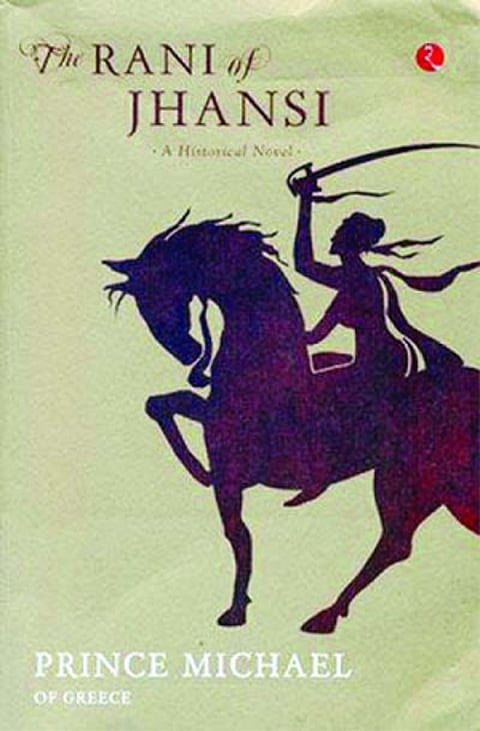
We have often come across images of the Rani of Jhansi seated on a horse brandishing her sword with her foster son, Damodar, sitting behind his mother tightly clinging on to her. Prince Michael’s work, The Rani of Jhansi: A Historical Novel, corroborates this image very well. There is nothing in the novel that gives us a new version of events relating to the famous Rani, yet her exploits holds one’s attention till the end. Since it is a fictional account, many characters have been fabricated making this book all the more fascinating. The tale of this eminent woman and her actions on and off the battlefield make for an engaging read.
Most of us have read about the famous warrior queen in our school texts — her being a Maratha princess; close to Nana Saheb, briefly the Peshwa of Bithur; married to the ruler of Jhansi; showing exemplary valour in tackling the British in the military combats. Other episodes in her life, however, are shrouded in mystery. Prince Michael’s book ably fills up this lacuna even as many of the episodes involving the Rani are fictional.
The author, in his elegant style, gives us more than a glimpse of this lady’s character, the kind of life she liked to lead, exposing even her frailties and weaknesses for she was a human. Juxtaposed with these qualities was an iron will, determination and a love of action and adventure. The book also shows us how India was like in the mid-19th century, lacking a central authority, divided into numerous principalities. The courts held by the rulers of these states teemed with intrigues and treachery. As a matter of fact, according to the novel, the Rani too was a victim of such betrayal by one of her retinue.
Prince Michael has ably brought out the Rani’s initial reluctance to join the rebellion, for all her spirit of adventure. This may be a matter of contention for the historians but the reader cringes when the British misunderstand the Rani’s noble intentions with regard to them, at least initially. By fabricating the character of Roderick Briggs, who in his letters to his fiancée, gives an account of the rebellion from the point of view of the British, the author has cleverly incorporated both the versions of the revolt — Indian as well as British — in the book. Roger, in his letters, in order to defend the atrocities committed by the British on the Indians, claims that they were carried out with “restraint worthy of the civilised people”. His claims, needless to say, are laughable.
Far from the image that one usually harbours of the Rani being of virile disposition, in fact, she is very much a woman who dresses up with feminine care, is fond of jewellery, and is a devoted mother to her foster son. Her romantic liaisons even as they seem fictional seem to confirm this fact.
The detailed versions of the military combats, which involved the Rani, were quite gripping, especially the way she defended Jhansi, and her fight against them till she was mortally wounded. That the Rani was an able strategist and an awe-inspiring leader has been corroborated by the novel. The descriptions of battles fought by the Rani are so captivating that they bring the reader to the battleground.
Particularly engaging are the last two chapters of the novel. One cannot help wringing one’s hands in despair when one reads how the soldiers, and their leading authority, Rao Sahib, squander precious time in wining and dining in Gwalior instead of leading an offensive against the British. Particularly towards the end, when the rebels decide to send the forces, led by the Rani, one can feel a palpable sense of foreboding. One knows immediately that the Rani is doomed. By the end of the book, the Rani has endeared herself so much to the readers that her death seems to leave hollowness in their minds.
The Rani of Jhansi is especially for those who detested history at school. Although not wholly true factually, for it is a historical novel, it will acquaint them to a unique moment in Indian history when northern India rose up in revolt to throw off the yoke of British imperialism. There are many things about the 1857 rebellion that seem almost mythical, even inexplicable. The book apart from revolving around the Rani also gives a lively account of the rebellion from its inception to conclusion.