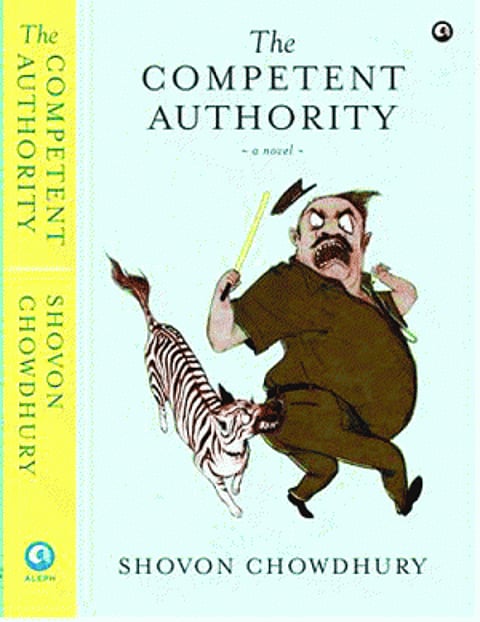

The Competent Authority
Author: Shovon Chowdhury
Publisher: Aleph, Rs 495
The book depicts the country’s socio-political condition, says Navneet Mendiratta
Good satire is hard to come by in this day and age. And therefore, when you do get to read something that tickles and teases your mind, the book instantly becomes unputdownable. There honestly is no other way to describe Shovon Chowdhury’s The Competent Authority.
The first thing that strikes you about this book is the uncanny resemblance that the plot bears to the chaos that currently exists in the country. It is, therefore, very easy to relate to the many characters, rather situations, that seem to keep cropping up in the book — viz political turmoil, public discontentment, general apathy and rampant corruption in the bureaucracy. In short, Chowdhury’s book is a brilliant satire (albeit grim) on the prevailing social and political condition in India.
What you have here is a scenario from a futuristic India of 2050 when the country has been nuked by a very powerful China and most of its cities (more specifically Delhi and Mumbai) have been wiped out. What exists is a “New New Delhi” which is under reconstruction by the orders of an autocratic bureaucrat who likes to call himself “The Competent Authority”. In essence, he is a megalomaniac and a control freak who is bent upon having another war with China just to prove his superiority.
Not that it is an easy task. What he has for challenge is a General who seeks “genuine” peace, a beautiful Prime Minister who is only a figurative head of the state coming from the “dynasty” (she is also someone he secretly lusts after) and Pintoo, a small boy with extraordinary (read supernatural powers) from a downmarket area of the survivors, Shanti Nagar, who wants to bring about genuine change for the good of people.
All this is aside from the political trouble that the bureaucrat is facing at the hands of Maoists of Jharkhand and their leaning towards Bengal, which has chosen to be a Chinese protectorate and is way beyond his administrative control.
Helping the challengers wittingly or unwittingly are unsuspecting characters namely Hemonto Chatterjee and his wife Banani, a corrupt policeman Ram Manohar Pande (who has actually been hired by a devoted husband Chatterjee to eliminate a dog who was bothering his wife Banani with his nonstop barking, and later turns against the couple after the wife befriends the animal), Ali and the people of Shanti Bai Nagar. How (and whether) they do it is what makes for a gripping tale of funny horror at what the world may turn out to be given the way it is headed today. What is interesting to note is the uncanny resemblance the event and the book bear to the current scenario that prevails in the country.
The introduction to the characters was perhaps the only painstaking thread that I had on to hold to while beginning to read the book. The knots, however, eased beautifully as the plot developed. It is delightful to figure the likeness of certain characters in the book to the existing lot — his bringing in of a popular spiritual guru, given the steady “faith” of people in the religious types; reinvention of Honey Singh and the MBA-type mercenary lot that run a queer bank called the Bank of Bodies that thrives on legitimised organ trade. Not very different to what the existing scenario is, you would find.
Chowdhury has kept his language and style simple and wit intact through the book. That he has made fun of practically everybody is telling on how the human psyche refuses to change despite all the mess man manages to create for himself; it is, in reality, quite ironical and very close to home truth. As is the human desire to turn the wheel back and get into the past to change things for a better now, when the answer lies in shaping the present well for a better future. Cliched you may say, but true.
The ease with which the author has been able to poke fun of the society in general and certain communities, including his own, is really commendable. Read the book for the witty satire that it is rather than envisage it as a commentary warning us about things to come. It’s a good time investment and refreshing change from what is available in the book market.