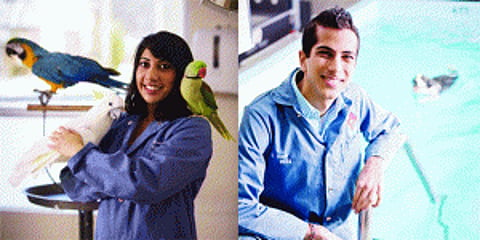

From animal farming to meat processing units to pet food production, there is a huge demand for veterinarians in various sectors including the health industry, says Dr Ambuj Kumar
Veterinary is as ancient as agriculture and livestock and for many of us, pets are our best friends. To bring them up and take good care of them, a veterinarian plays a very important role. Apart from health care, they play several other roles in medical science. They are responsible for ensuring that the supplied food in the country is safe for humans as well as animals. They do surveys and perform tests to control various epidemic and contagious diseases. To combat the existing or imminent diseases, they do research, develop medicines and vaccines for both animals and humans. That is why, for every society, veterinarians are one of the most sought-after people and they are rewarded both monetarily and are held in high regard.
liberalisation of the Indian economy opened many unexplored vistas for veterinarians. Needs of the world are changing speedily and this transition can also be seen in animal health and veterinary industry. From animal farming to meat processing units and poultry farming to pet food production there is a huge demand for veterinarians in variety of commercial sectors and health industry.
If one is from science background and Physics, Chemistry and Biology (PCB) are your subjects in Class XII then Bachelor of Veterinary Science and Animal Husbandry can be a very good option. If your age is 17 year or more and the percentage you secured in the Class XII is 50 per cent or above then you are eligible to take entrance exam for Bachelor of Veterinary Science of all the recognised universities and colleges in India. State Agriculture University at State level and by Veterinary Council of India at National level conducts these examinations annually across India.
There is a consistent need for veterinary professional not only in India, but globally as well. Aspirants can carve a distinct niche in areas like biomedical research, hospitals, diagnostic laboratories, food industries, meat and dairy industries, consultation and can also go for independent clinical practice.
Fresher can earn between Rs20,000 to Rs40,000 per month on an average in various hospitals, institutions and laboratories in India. While for experienced veterinarians, salary depends upon the knowledge, experience and professional attitude of a person. Majority of veterinarians in metros and big cities of India prefer private practice only as it is practically more lucrative than other possible avenues.
In India, there are 38 veterinary colleges and at least 40 State agricultural universities which offer Bachelor of Veterinary Science and Animal Husbandry degree. After the successful completion of Bachelor of Veterinary Science and Animal Husbandry programme, students can also for a master degree and subsequently Ph D in Veterinary Science.
Many veterinarians prefer to take specialisation in disciplines such as cardiology, medicine, oncology, dermatology ophthalmology and surgery. Students with good academic record can also apply for higher education in abroad, where they can also earn scholarships and other incentives. Countries like Denmark, Australia, New Zealand and the US always encourage veterinary students for high education and research work.
Among the many prestigious institutes in India, Indian Veterinary Research Institute, Bareilly, UP; Andhra Pradesh Agricultural University, College of Veterinary Science, Hyderabad; National Dairy Research Institute, Karnal and College of Animal Science CCSHAU, Hissar are some of the best places to study veterinary and animal sciences.
The writer is director of Institute of Professional Studies and Research.