
In the year 2025, India, the largest democracy and fourth-largest economy in the world, celebrated 77 years of carving out its rightful place on the global horizon. This saga of the evolution of India is characterised by consistent economic growth, stable and secure political administration facilitating the development of capabilities. As a result, today India is playing a decisive role on the global level. The recent presidency at G20, vaccination provided to nearly 100 countries across the globe during the global pandemic of COVID-19, and India-initiated flagship transformative initiatives like the International Solar Alliance, Counter Terror Convention, and No Money for Terror reflect India’s capabilities. While undergoing this evolution, India has always maintained strategic autonomy, making it a most favoured friend or strategic ally of various stakeholders of the world.
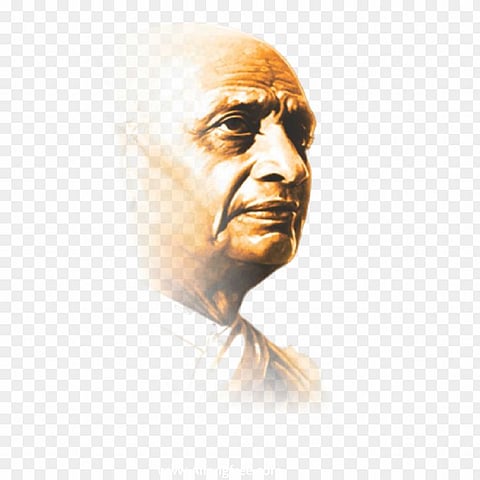
The basis that remains a defining feature of India’s growth saga is diversity united through its strong foundation. The strong foundation characterised by sovereignty and national integration was comprehended by the visionary statesman Sardar Vallabhbhai Patel after independence. While laying the foundation of India’s sovereign journey as a nation, Sardarsahib not only united the 560 princely states into an independent nation united by the Constitution, which is applicable to the whole of India. Sardar Patel, who was the first Deputy Prime Minister and first Home Minister of India, displayed diplomatic acumen and strategic foresight driven by his strong belief that sovereignty cannot be diluted and ill-defined; India’s sovereignty must be undivided. His statesmanship is strongly reflected in his decisive handling of various complex political problems that evolved due to insidious British intrigue to leave behind a truncated and weaker India.
This decisiveness acted as a great stabilising force amid the communal and political violence that followed the partition of India. His strong focus on internal security or domestic affairs enabled India with a strong, stable administrative framework, weaving and establishing strong synergy across States and the Central Government through India’s Civil Services and Police Services, ensuring their objectives of governance in the interest of the nation rather than mere loyalty to the British colony. These services are also called the Steel Frame of India. His vision of nationalism remained a defining feature of India’s governing principles of the Constitution, characterised by unity and integrity, and played a decisive role in the country’s progress and stability. His clear understanding of India’s diverse outlook ensured that regional, linguistic, and cultural differences were respected and did not dominate the collective national identity, establishing a coherent national identity and collective progress. His political foresight and wisdom of inclusivity and harmony continue to resonate in a world often threatened by division and uphold India’s democratic values, characterised by shared responsibilities to uphold fairness, mutual respect, and peace.
Various challenges posed to India continue to test its collective spirit. But the idea of “Ek Bharat, Shreshtha Bharat” remains a guiding principle, underscoring the fact that India’s greatness lies not in similarities but in its ability to hold together its diverse values and outlook through shared values and mutual respect.
Sardar Patel remained focused on strengthening the internal security apparatus of India and played a crucial role in establishing administration and security governance that maintained law and order in the newly independent country. He often emphasised a disciplined and efficient bureaucracy that plays a pivotal role in challenging situations within a diverse and vast demography like India. By merging these princely states, Sardar Patel not only united the country but, by integrating them, weaved a solid physical integrity of India, establishing clear boundaries. In terms of economic development, Sardar Patel often emphasised a strong economy built through rapid industrial development, reducing external dependency and modernising the armed forces.
Today, these have become the policy objectives of India’s foreign and defence policy, strongly emphasising ‘Atmanirbhar Bharat’, which is not a mere short-sighted solution but a long-term transformative strategy based on sound economic principles and pragmatic policies facilitating comprehensive development. This is aptly reflected in India’s evolved security landscape, ably addressing the conventional security threats emanating from the west, northwest, east, and northeast of India, and ensuring India’s preparedness against the rapidly evolving challenges of the 21st century.
As a result, India is one of the very few countries in the world that has effectively addressed its security challenges using an appropriate combination of development and proactive security measures.
These security challenges include effective victory against Left-Wing Extremism, removal of Article 370, and peace and stability established in the northeastern states. When one takes stock of the present situation, his legacy continues and shapes India’s political and administrative landscape. Aptly recognised by the Government to commemorate his unparalleled statesmanship, it has been honoured by celebrating the birth anniversary of Sardar Patel as National Unity Day.
The Government truly complemented the visionary contribution of Sardar Sahib towards laying the strong foundations of the largest democracy on the planet by raising a towering monument in the form of the tallest statue, aptly naming it the “Statue of Unity” on the riverbed of the River Narmada at Kevadia, Gujarat, which was once ill-famed for activism and anti-development agitations. In recognition of his 150th birth anniversary, the Government launched a nationwide programme for two years from 2024 till 2026 as “Ek Bharat, Shreshtha Bharat”, transcending the message of national integration and emphasising comprehensive development resonating across all sections of India and Overseas Citizens of India abroad. His vision is aptly reflected in the Government’s proactive approach towards development and addressing prominent security challenges. The Government prioritised sovereignty and national integration and achieved the desired outcome of comprehensive development across all sections of society.
As a result, prominent security challenges like cross-border terrorism in the state of Jammu and Kashmir are effectively addressed, where the Valley has embraced growth and development. Left-Wing Extremism is breathing its last, and the ill-famed regions of Abhujmar and Dandakaranya have proved to be development hubs today, where development policies and complementary infrastructure developed by the Government, based on the principle of cooperative federalism, are achieving stability and people-centric development. The vision of cooperative federalism, institutional integrity, and prioritisation of national interest over parochial divisions have truly proved to be defining features of the Indian democratic framework of governance, ensuring the upward growth trajectory for India in times of global flux and uncertainty.
This reflects the fact that Sardar Patel’s legacy is not a mere historical consolidation but has proved to be a navigating force for the evolving nation-building process that demands reflection and re-application in present times. His visionary leadership inspires leaders who face complex geopolitical and socio-economic challenges in today’s times, empowering them with a solution-oriented, realistic perspective of the situation. It enables decision-makers and administrators to make difficult but necessary decisions in the national interest.
The effective handling of the global pandemic like COVID-19, addressing various natural calamities effectively, public welfare through citizen-centric policies like direct benefit transfer, effective use of technology, proactive policing, and maintenance of effective law and order have made a conducive atmosphere for growth and development.
As a result, India has not only done well in terms of its GDP but in all domains of development. India has recorded an upward trajectory. This sums up the fact that, despite decades since his existence, Sardar Patel’s values, ideals, and decisive outlook have percolated into today’s 21st-century generations through his speeches, writings, and records. They have not only boosted morale but also developed a sense of pride and patriotism among the masses in India. His emphasis on self-reliance, hard work, and devotion to the nation aptly sums up the spirit of Atmanirbhar Bharat, which is on the cusp of its rise on the global horizon.
Sardar Patel’s unwavering patriotism, leadership, and vision for a strong and prosperous India will continue to inspire generations. His life, which was dedicated to public service and achievements in the foundation years of Independent India, is a testimony to the power of leadership, courage, and commitment towards the nation’s development. On this occasion, let us commemorate his legacy, seek inspiration from his towering personality, and dedicate ourselves to contributing constructively to building a strong, united, and prosperous India. It will be a tribute to Sardar Patel in the real sense, who devoted his life to envisioning a strong, united, and prosperous India.
The writer is a distinguished scholar of security studies and a former Indian diplomat to Australia