
- HOME
- INDIA
- WORLD
- BUSINESS
- STATES
- LAW & JUSTICE
- ENTERTAINMENT
- SPORTS
- VIEWPOINT
- LIFESTYLE
- TECH
How different was the erstwhile state of Jammu and Kashmir (presently divided into two Union Territories) from the rest of the states? This is a vital question that has multiple answers, each of which is a separate topic of research and discussion. However, one glaring difference has been highlighted by the date October 26.
While the rest of the states and Union Territories celebrate their 'Foundation Day', Jammu and Kashmir celebrates it as 'Accession Day' — the day (October 26, 1947) when the pre-1947 ruler of the state decided to accede to India. It is not merely a term or description but a strong symbol encompassing the turbulent history of what was once the sprawling Himalayan state, which shared borders with four countries. The Partition of India in 1947 and the subsequent accession of Jammu and Kashmir to India changed the entire geographical map of the region.
October 26, 2026, marked the 79th 'Accession Day', which is widely celebrated nationwide and, of course, in the Union Territories of Jammu and Kashmir and Ladakh, which were once part of the same state. The state had the unique distinction of being a conglomerate of three diametrically opposite regions — Jammu, Kashmir and Ladakh - representing, in true terms, the oft-repeated dictum of 'Unity in Diversity' in the context of overall national diversity and unity. The regions differ in their geographical and geological features, religion, language, culture, etc. Still, they survived as a unit, notwithstanding some inherent differences, until August 5, 2019, when the Narendra Modi government introduced constitutional changes with far-reaching consequences. This resulted in the demotion and division of the historic state of Jammu and Kashmir into two Union Territories through the dilution of Article 370 of the Constitution. Yet 'Accession Day', despite losing its sheen, has not lost its relevance one bit, as it has become an umbilical cord connecting India and Jammu and Kashmir since its inception and to this day.
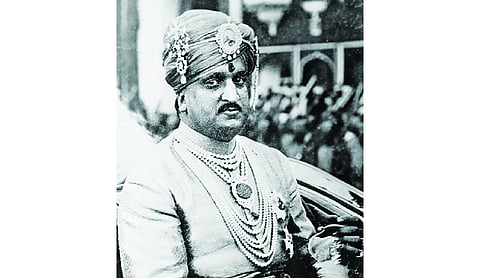
This is also because whatever has happened since October 26, 1947, including the developments of August 5, 2019, has its roots in 'Accession Day'. It paved the way for the erstwhile princely state of Jammu and Kashmir, ruled by the Maharaja, to join the Indian Union. India has consistently claimed Pakistan-occupied Kashmir (PoK) as its rightful territory, and a unanimous resolution was passed by Parliament in this regard in 1994. And rightly so. At the time, the then Maharaja of Jammu and Kashmir, Hari Singh, signed the Instrument of Accession with India for the entire territory of Jammu and Kashmir governed and controlled by him at that juncture. It was the subsequent Pakistan-engineered attack on the state through 'Kabailis' (tribals) in 1948 that led to this development. The attack took place against the backdrop of a 'Standstill Agreement' proposed by the Maharaja to both India and Pakistan on August 12, 1947. Under the agreement, the provision was to maintain existing administrative, communication and economic arrangements after British paramountcy lapsed. Pakistan readily accepted it, only to violate it immediately thereafter, whereas India refused to do so, which ultimately led to the signing of the 'Instrument of Accession'.
The then Prime Minister of Jammu and Kashmir, Janak Singh, sent identical telegrams to India and Pakistan, proposing that all pre-Partition arrangements, such as postal, telegraph and transport services, continue unchanged. The ostensible idea was to make Jammu and Kashmir a buffer state between India and Pakistan. Pakistan immediately accepted the proposal on August 15, 1947, and intimated by telegram that the services would continue. Its dubious design had started taking shape from here onwards. The arrangement with Pakistan collapsed after Pakistan imposed an economic blockade, going against the spirit of the 'Standstill Agreement'. Subsequently, it conceived and backed 'Operation Gulmarg', allowing tribal forces to invade Jammu and Kashmir in October 1947. The Pakistan-backed operation led to looting, plunder and the killing of innocent people across caste and religious lines, bringing immeasurable misery. Pakistan's backtracking on the 'Standstill Agreement' and its attempt to grab Kashmir by force left Maharaja Hari Singh with no option but to sign the 'Instrument of Accession' with India. The route to signing the agreement was not smooth, given the Maharaja's reservations and the Indian government's steadfast position that he first had to clarify his intentions in writing before New Delhi signed the agreement and sent the Indian Army to defend Kashmir. Finally, left with no choice as the marauding Pakistan-backed tribal forces had almost reached Srinagar, Maharaja Hari Singh came to terms with the situation. He signed the Instrument of Accession with India on October 26, 1947. And the rest, as they say, is history. It is another matter that Pakistan has, to this day, refused to recognise ground realities and has continued targeting Jammu and Kashmir through wars, both direct and proxy. The lone surviving witness to the events of that time and son of Maharaja Hari Singh, nonagenarian Dr Karan Singh, who was then the heir apparent of Jammu and Kashmir, aptly described the situation: "Death and destruction were fast approaching Srinagar; our smug world had collapsed around us…."
After the British left the Indian subcontinent on August 14, 1947, the princely state of Jammu and Kashmir remained independent for 73 days. Maharaja Hari Singh was already grappling with internal disturbances, with multiple uprisings against Dogra rule, most notably in 1924 and 1931. He also faced a formidable challenger in Sheikh Mohammed Abdullah of the National Conference, who became the symbol of the democratic struggle against the monarchy. The National Conference, earlier called the Muslim Conference, was influenced by the Reading Room Party of 1931, an anti-Dogra group of left-wing Muslim intellectuals from the Jammu region.
This was another backdrop to the events of 1947-48. Caught in the crossfire, Maharaja Hari Singh's indecision ultimately led to the signing of the Instrument of Accession with India, leaving him with no other option. Experts believe his preferred choice was to remain an independent principality. The 'Standstill Agreement' was ostensibly intended to secure recognition of Jammu and Kashmir's suzerainty by both India and Pakistan, with its borders extending towards China, Tibet, the then USSR and Afghanistan.
Pakistan had accepted the proposal immediately, only to violate the agreement months later. However, India did not do so and instead asked the Maharaja to send a representative to New Delhi for further discussions on the 'Standstill Agreement', which never materialised. 'Accession Day' is now an annual public holiday in the Union Territory of Jammu and Kashmir. It was officially declared an annual public holiday by the government in 2020, but only after the demand had acquired a controversial dimension, leading to protests and demonstrations. The then Lieutenant Governor's administration, overseen by the Union Home Ministry, took time to finally accept the demand. This followed considerable controversy and rancour generated by vested political interests seeking to foment communal and regional divisions.
The writer is political analyst; Views presented are personal.