
After two years of pandemic and severe hits to the economy due to note ban, a semblance of market restoration is being noticed
The Indian economy is now moving up after certain unsavoury scenarios of note-ban, pandemic closures of activities. Gold sales are up, event bookings are rising, market has a good time during Diwali despite cumulative inflation and less intervention by the state apparatuses.
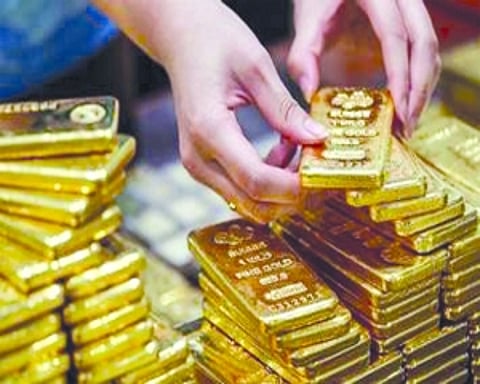
The G 20-led state controls created panic, made people dependent on the government and stymied growth globally. A free flow Diwali is changing that. Sales rise 10 percent and gold demand rises to 96.2 tonnes in India, says the World Gold Council.
According to the Confederation of All India Traders (CAIT), sales of its 70 million members increased over Rs 72,000 crore in at least 20 cities from where it could collect the data. Some other data claim $1.25 trillion sales. Secretary general of CAIT Praveen Khandelwal says that for a long time, people had subdued their needs because of closure of activities in the country and the shock that demonetisation had given to them. Now with the opening up of the market and activities, people are making their purchases freely.
Many retailers say they were apprehensive before the festival but to their surprise despite severe rise in prices purchases are increasing. In demand were items such as earthen lamps, candles and papier mache lamps, which helped small potters, craftsmen and handicraftsmen rake in substantial profits. Sweets, dry fruits, footwear, watches, toys, home décor, and fashion clothing also saw huge demand.
The World Gold Council expected gold sales would recover from 35 per cent below the pre-pandemic level. The demand has been more than expected. But it may not be as euphoric as the government is saying or as the Rs 1.3 lakh crore GST collections indicate.
The CAIT says this year sales exceeded that of 2019 — Rs 60,000 crore; Rs 50,000 crore in 2018 and Rs 43,000 crore in 2017. The confederation says the upswing shows a sustainable demand trend as rising vaccination levels along with lower transmission levels have instilled confidence in buyers.
The expectation is that by March 2022, there would be another Rs 2 lakh crore sales. But GST collections may not be the actual indicator because it is collected over high prices due to inflation. Overall growth is uneven. Some sections are doing well but India slips down on hunger index to 101 position.
The wedding season beginning mid-November is to continue the boom. The weddings this year are expected to happen with the usual pomp and show. Countrywide, the demand for gold sales surged. Weddings are one of the biggest drivers of gold purchases in India as bullion in the form of jewellery is an essential part of a bride’s dowry and also a popular gift from family and guests.
Gold remains the biggest financial security instrument for rural and other families. The investment is considered secure and appreciating. For the bride too it is an essential part of her dowry and also a sought after gift from family and guests. After two years of pandemic and severe hits to the economy due to note-ban a semblance of restoration is being noticed.
The weddings also create wealth distribution at various levels. Till November-end, about 25 lakh marriage celebrations are on the cards. A wedding in India involves banquet halls, caterers, various kinds of pipe bands, music system, hiring of musicians, decorations lights, ponies, priests, ornaments, garments and gifts. At the social level, different artisans and craftsmen are involved in generating income for many.
It is not the Indian businesses that alone are gaining but many foreign houses and retailers are making robust sales. In short, the Indian social system is getting strengthened. As per estimates till Diwali, about Rs 9,000 crore was spent on gold jewellery and silverware while traders selling packaging items marked good sales.
Despite the chances of a progressive recovery, the RBI holding on to the repo rate at 4 per cent unchanged for the eighth time in a row is raising eyebrows as savings is becoming non-remunerative. In reality, the rising inflation is eroding the basic value of savings. This is being viewed as a risk to the economy. Indian economy traditionally has been growing on small savings that are now being disincentivised.
The note-ban that had shaken the poor, could not unearth black money nor contain fake currency said to be coming from Pakistan. After five years, Directorate of Revenue Intelligence says that fake currency seizure has unprecedented jump.
Strong controls and G-20 harsh steps have not helped countries. India must discuss how to ensure a free-flow growth instead of oppressive imposition of measures that cause scares.
(The writer is a senior journalist. The views expressed are personal.)