
Author: Acharya Prashant
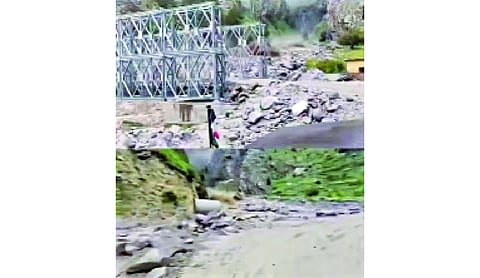
When a flood destroys a bridge, rebuilding it creates economic activity. Someone buys steel and cement, construction companies get contracts, workers are hired, and money changes hands. All of it adds to GDP. But the people had a bridge before the flood. After spending hundreds of crores, they may have no more than the bridge they already had. Rebuilding, by itself, is no evidence that wealth has grown.
The industries that add to climate change make huge profits. As climate risks grow, other businesses earn money by protecting people and rebuilding damaged settlements. Both can do well while the world loses the natural and social wealth its future depends on. Oxfam's October 27 report, Disaster Divide, came out ahead of COP31, now underway in Turkiye. It looks at how the wealthiest add far more than their share to climate change, stay relatively shielded from its effects and sometimes profit from the response to disasters.
The profits are private. The losses are shared.
By Oxfam's estimate, the richest 0.1 per cent of humanity, some eight million people, produce more consumption-based carbon emissions than the poorest 44 per cent, around 3.5 billion people, put together. A farmer who runs a diesel pump because there is no reliable electricity, and a billionaire who takes a private plane for convenience, are both using energy. Their needs, choices and responsibilities are worlds apart.
Personal consumption tells only part of the story. A fossil-fuel company takes in more than it spends, so it reports a profit. But the emissions linked to its products add to warming. Farmers lose harvests, workers lose income in extreme heat, and communities face flooding. Where in the company's accounts do these costs show up?
Economists call such costs externalities. But the cost is external only to the transaction. The world still bears it. We have made certain goods look cheap by refusing to count part of the bill. A company may earn Rs 1,000 while doing ecological damage worth several times that amount. So for whom has the company succeeded? That depends on where we draw the boundary around what we call ours.
Oxfam projects that the global disaster-recovery market will grow from around $70 billion a year to $92 billion a year by 2029, with climate-related extreme weather adding to demand. The companies doing this work do something valuable. But we would hardly celebrate an epidemic just because the hospitals treating its victims had earned more. The report also finds that BlackRock and Vanguard hold investments in 92 per cent of the 217 companies in its Destroy & Rebuild Index, which spans carbon-intensive industries and disaster recovery. Nothing in these figures proves deliberate wrongdoing; big asset managers invest across the economy for their clients. But the same pools of capital can earn from industries that add to climate risk and from businesses that help societies cope with the fallout.
GDP does not give a full account of what a country owns or loses. Think of a man who inherits a large house and starts selling its doors, its windows and its furniture. His income seems to be rising, but his inheritance is being taken apart. We often treat nature the same way. I have compared Himalayan glaciers to fixed deposits accumulated over thousands of years. As they melt faster, we are consuming our capital and treating the proceeds as income.
Money has become the god of the family and GDP the god of the country. A government announces higher growth and we applaud. A company announces record profits and we celebrate. We seldom ask what has been run down, who has paid the hidden costs, or whether life has actually improved. Much of our economic thinking begins only after we have declared a desire beyond question. Consider livestock: by the UN Food and Agriculture Organization's count, it accounted for 4.4 billion tonnes of greenhouse-gas emissions in 2024. Cleaner production matters. So does asking what we choose to produce.
Why do we organise so much of economic life around activities whose consequences are destructive? Corporations and investors must answer for the costs they impose. But they also work within a society that has made accumulating and consuming its main measures of success. Someone who measures his worth by what he owns is doing more than buying things. He is asking them to answer a question about himself: who am I if I do not own this? The pursuit is not fundamentally for more possessions. It is for more self.
Blaming a few thousand billionaires is easy. But who made them our measure of success? The young person who condemns a billionaire's private jet may also dream of owning one. The first step is to stop worshipping the rich.
Nothing here argues for imposing restraint on people who lack the basics. In 2024, India's carbon dioxide emissions came to roughly 2.1 tonnes per person, against 13.4 tonnes in the United States. India needs reliable electricity, better housing, healthcare, education and productive work. None of this requires us to imitate the excesses of the world's richest societies. And one need not be wealthy to worship wealth.
Private choices are no substitute for public policy. High-emitting industries must be held to account, and poorer countries need grants to help them adapt, not another cycle of disaster and debt. Still, regulation alone cannot answer why an economy keeps multiplying needless demands. That needs an education of the self.
We are often told that environmental responsibility demands sacrifice. Sacrifice of what, though? If someone keeps acquiring ever more expensive things just to feel adequate, being free of that compulsion is hardly deprivation. There can be concern for lives that do not belong to us, for beings who cannot repay us, and for generations who will never know our names. Such concern is love.
The bridge destroyed by the flood must be rebuilt. But no contractor can bring back an extinct species or restore a glacier that took thousands of years to form. So who profits while the world pays? In the accounts, a few do. But the one who profits has only been handed a bigger number to answer a question that no number can settle. And everyone else has been handed the bill. An economy in which a few grow richer while the world grows poorer has learned to measure profit, but it has yet to understand wealth.
Acharya Prashant is a philosopher and author whose work centres on self-inquiry and its application to contemporary life; Views presented are personal.